

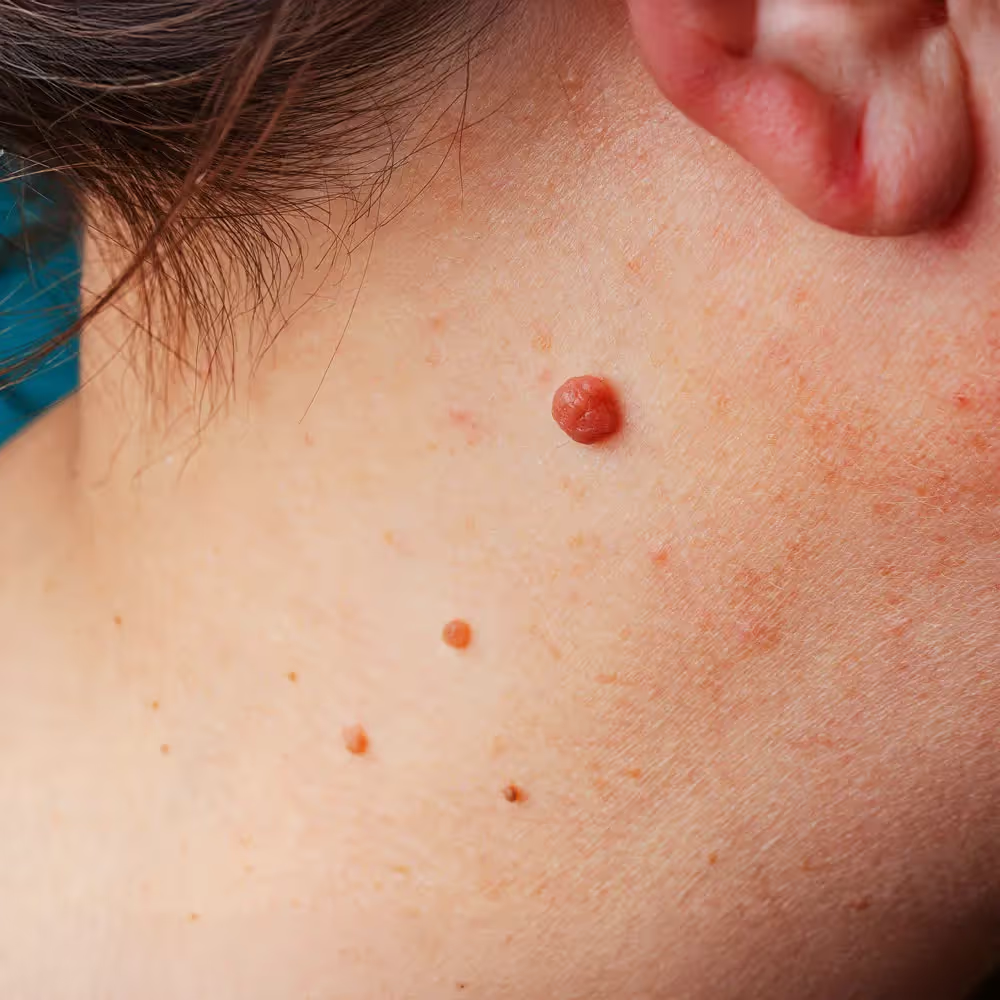
Mole Removal Cost  

Mole Removal in the UK typically costs £500 for a single mole. At the Minor Surgery Clinic Mole Removal starts at £295 with a free consultation included in the cost.
Mole Removal Price from £295

Operation Time:

10-30 Minutes

Return to work:

0-1 Days

Anaesthesia

Local

Discomfort

Minimal
Header image
Treatment

How Much Does Mole Removal Cost in the UK?

In the UK you can expect to pay between £500 and £1000 for a single mole removal, which usually includes consultation. At the Minor Surgery Clinic we offer mole removal from £295 which includes the consultation and surgery all as a one stop process. Free consultations are available for anybody looking to explore their options and receive expert advice on the procedure.

What Factors Influence Mole Removal Cost in the UK?

Factors influencing the cost of mole removal in the UK include the method of procedure, the location of the clinic and their reputability and facilities. At the Minor Surgery Clinic we use the shave excision method which is the gold standard for non-recurrent mole removal, and also helps to keep costs affordable for our patients.

Type of Treatment: The method used to remove the mole plays a significant role in pricing. Surgical excision is usually the most expensive option, as it is more complex and often includes laboratory testing. Less invasive techniques, such as shave removal or laser treatment, are typically more affordable.

Location of the Clinic: Clinics based in London and other major UK cities often charge higher fees due to increased operating costs. Practices in smaller towns or rural areas may offer lower prices.

Experience and Reputation of the Clinic: Some clinics led by experienced clinicians or specialist dermatologists may charge more, reflecting their expertise, facilities, and standards of care.

Before and after Mole Removal

Understanding Moles and When Removal May Be Recommended

A mole is a cluster of pigmented skin cells known as melanocytes. Most moles are harmless and can be present from birth or develop over time. They vary in appearance and may be flat or raised, smooth or textured, and range in colour from light brown to very dark brown or black.

While the majority of moles do not cause any problems, changes in size, shape, colour, or texture should always be checked.

Moles that begin to itch, bleed, or develop irregular borders may require medical assessment. In some cases, a GP or specialist may recommend removal so the tissue can be examined to rule out skin cancer.

Common Reasons for Mole Removal

Medical concerns: Removal may be advised if a mole changes in appearance, grows rapidly, becomes darker, bleeds, or develops uneven or asymmetrical edges.

Cosmetic preferences: Some people choose to have moles removed for aesthetic reasons, particularly if they are located on visible areas such as the face or neck.

Practical discomfort: Moles that catch on clothing, jewellery, or are irritated by shaving can become uncomfortable, making removal a practical option.

Mole Removal Treatment Options

Surgical Excision (UK Prices From: £350–£750+)

This method is typically used for deeper or suspicious moles. The area is numbed with a local anaesthetic, the mole is removed along with a small margin of skin, and the wound is closed with stitches. The tissue is usually sent for laboratory analysis.
Best for: Deep or medically concerning moles
Considerations: Small scar and a slightly longer healing time

Shave Removal (UK Prices From: £250–£500+)

The mole is carefully shaved flat to the skin’s surface using a surgical blade. Stitches are not usually required and healing is quicker.
Best for: Raised, non-cancerous moles
Considerations: Not suitable for moles that require testing

Laser Treatment (UK Prices From: £250–£500+)

A focused light beam is used to break down pigmented cells without cutting the skin, making it popular for cosmetic mole removal.
Best for: Small, benign moles
Considerations: Not suitable for suspicious moles and may require multiple sessions

Cryotherapy (UK Prices From: £150–£300+)

Liquid nitrogen is applied to freeze the mole, causing it to fall away naturally over time.
Best for: Small, harmless moles or skin tags
Considerations: May require repeat treatment

How Much does NHS Mole Removal Cost?

The NHS does not provide mole removal for cosmetic reasons. If a mole is considered medically necessary and removal is approved, there is no cost to the patient.

Access to NHS treatment requires a GP referral followed by assessment by a dermatologist, and cosmetic removals are not covered.

Mole Removal at the Minor Surgery Clinic

Mole Removal Surgery (Small Sized Moles)
From £295

How Much Does Mole Removal Cost Abroad?

Some people explore mole removal in other countries, where prices in parts of Eastern Europe or Asia can range from around £90 to £250 per mole.

While the lower upfront cost may seem appealing, it’s important to consider additional factors:

Aftercare: You may need follow-up care once you return to the UK.

Quality and safety: Standards vary between countries and clinics, which can affect outcomes.

Travel costs: Flights, accommodation, and local transfers can add significantly to the total expense.

Why You Shouldn’t Remove Moles at Home

Home removal methods can cause infection, scarring, and may delay the detection of serious conditions. Many DIY treatments are unregulated or illegal, so mole removal should always be done by a qualified professional


Frequently asked questions

Everything you need to know about mole removal surgery
Mole Removal NHS: Can the NHS remove moles for free?
The NHS generally does not provide free mole removal unless there is a medical reason, such as a suspicion of skin cancer or if the mole is causing significant discomfort or health issues. Cosmetic mole removal is not usually covered by the NHS.
How should I check my moles?
It is important to regularly examine your moles for any changes in size, shape, colour, or texture. Look out for uneven or multiple colours, an increase in size, irregular or rough edges, and any signs of irritation such as redness, itching, bleeding, inflammation, or crusting. While changes don’t always mean melanoma, any unusual signs should be evaluated by a dermatologist.
How might my moles affect me?
Most moles are harmless and pose no health risk, but some can change and become cancerous, turning into malignant melanoma. Moles that appear atypical or dysplastic have a higher risk and should be monitored carefully. Even benign moles can affect self-esteem or cause physical inconvenience if they are raised or located where they catch on clothing or interfere with shaving.
How often do I need my moles checked?
We recommend having your moles reviewed monthly to monitor for any changes. People with a higher risk of skin cancer may require more frequent check-ups. If you notice any changes between appointments, you should schedule a mole check promptly.
Can a mole grow back after it’s removed?
If a mole is completely removed through surgical excision, including a margin of healthy tissue, it should not grow back. However, the mole can recur or grow back over time. Shave excisions often flatten the mole rather than fully remove it, so there is a chance of regrowth. Surgical excision is the preferred method when cancer risk exists, while shave excision might be chosen for cosmetic reasons despite the possibility of the mole returning.
How do I know which mole removal treatment is right for me?
Your skin specialist surgeon will assess your mole during the consultation and recommend the most suitable removal method based on its size, location, appearance, and any medical concerns. This personalized approach ensures the safest and most effective treatment for your individual case.

Still have questions?

Can’t find the answer you’re looking for? Please chat to our friendly team.

"Many thanks for the good job you have done. I also appreciated the relaxed manner which put me at ease."

Mrs P. Chapman
Patient

"I had three moles removed from my back by Dr Ouali , it was a good painless experience and I’m happy with the result as the scars faded away nicely."

H.S.
Patient

"I had a small amount of Vaser liposuction under my chin. Quick, painless surgery. I’m very happy and will be going back for additional procedures."

Anonymous
Patient
UK-Trained Experts

Our Lead Surgeon

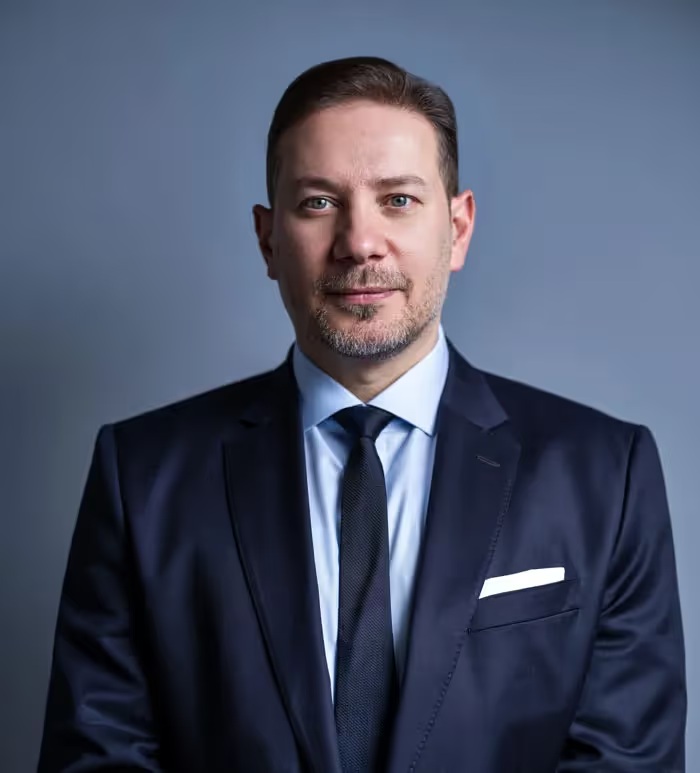
Dr. Braham Ouali, MD, SCSD, is a UK-trained, award-winning surgeon with more than twenty years of experience. Since qualifying as a medical doctor in 1999, he completed a decade of NHS plastic surgery training in the United Kingdom and earned a Professional Diploma in Skin Cancer Surgery from Bond University in Melbourne, Australia. As a member of both the British Association of Cosmetic Surgeons and the American Academy of Cosmetic Surgery, Dr. Ouali has developed the expertise necessary to perform advanced procedures with precision and care.

Having personally conducted tens of thousands of surgeries, Dr. Ouali tailors each procedure to meet his patients’ individual needs and to achieve their complete satisfaction. He is particularly renowned for his work in skin surgery and body contouring, including eyelid surgery, rhinophyma treatment, earlobe reconstruction, and liposuction of the abdomen, arms, legs, and gynecomastia. His skill set also encompasses areola reduction, breast mini lift, and the removal of skin lesions—such as moles, cysts, lipomas, keloids, and skin cancers—with a special focus on facial reconstruction.

Known for his compassionate approach and meticulous technique, Dr. Ouali consistently receives “very good” feedback from both patients and colleagues. He is honoured to welcome patients to Minor Surgery Clinic, providing each individual with the highest standard of care in a warm and professional environment.

Contact us

Our friendly team would love to hear from you. You can fill out the form to get in contact with our team, send us a whatsapp message or contact us via one of the methods below.

Contact us

Thank you! Your submission has been received!
Oops! Something went wrong while submitting the form.