

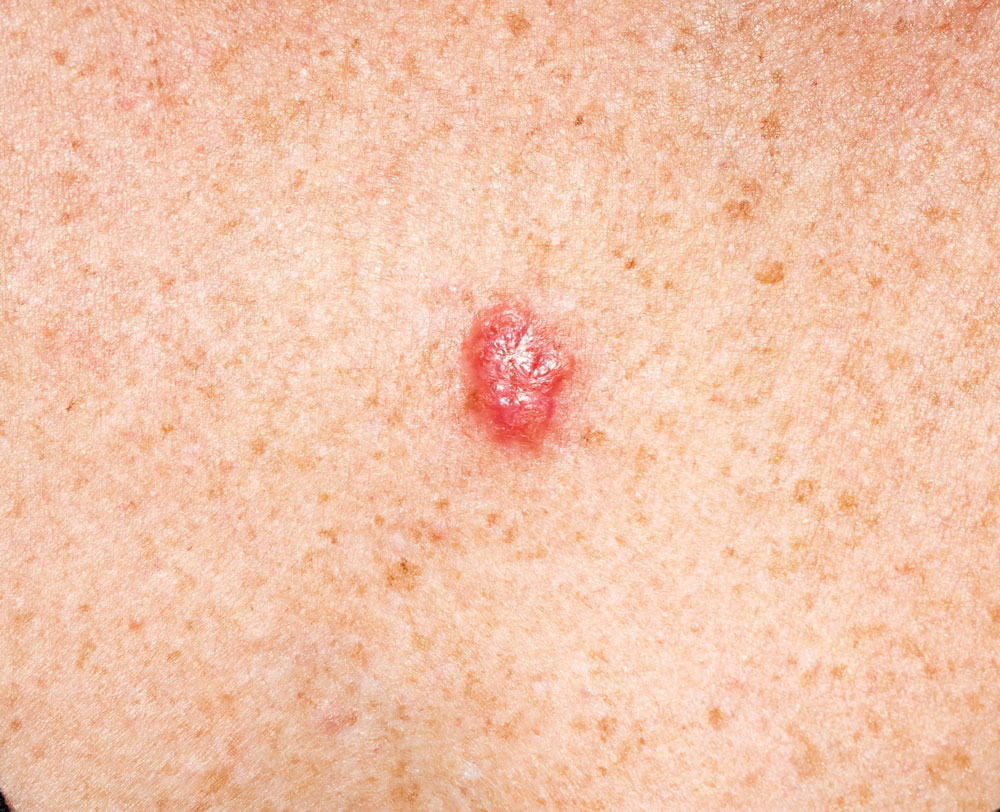
Basal Cell Carcinoma, commonly referred to as BCC or Rodent Ulcer, is recognized as the most prevalent form of skin cancer globally. While there are no official statistics, experts estimate that there are around a quarter of a million cases of Basal Cell Carcinomas annually in the UK alone.
BCC (Basal Cell Carcinoma) is a non-pigmented skin cancer. It arises from malignant tumours of skin keratinocytes, primarily due to prolonged exposure to ultraviolet (UV) radiation from sunlight or tanning beds. It predominantly affects individuals over the age of 40, although younger patients can also be diagnosed, particularly those with fair skin or those on immunosuppressive therapies.
BCC (Basal Cell Carcinoma) typically manifests as a slow-growing, painless skin lesion found on sun-exposed areas such as the face, ears, scalp, neck, and shoulders, but it can appear anywhere except on the palms and soles. The lesions may present as shiny pink pearly bumps, flat scaly red patches, non-healing sores, or scar-like areas. It is crucial to consult a general practitioner or specialist if any new skin lesions are noticed.
Fortunately, BCC is generally not life-threatening, as it rarely spreads to other organs. However, if left untreated, it can lead to regular bleeding or significant disfigurement, particularly if located on the face.
Basal cell carcinoma (BCC) is typically treated through surgery, where the cancerous tissue along with a margin of healthy skin is removed to ensure complete excision. The removed tissue is sent for histological examination to confirm cancer-free margins and complete removal.