
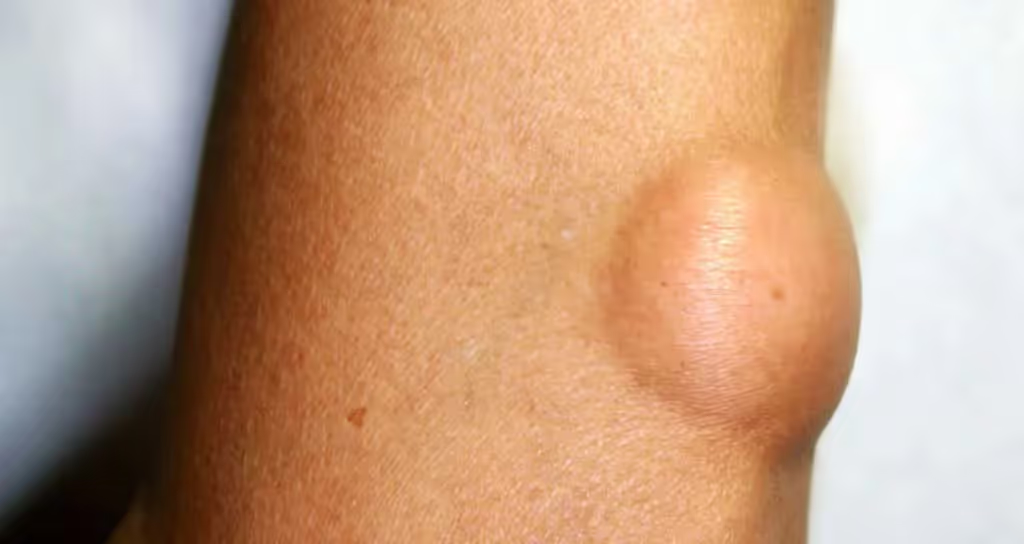
A lipoma is a soft, fatty lump that grows beneath the skin. Most lipomas are entirely harmless, slow-growing, and painless, which means it is understandable that many people are reluctant to seek medical treatment for them. If NHS waiting times are long, if the cost of private treatment feels uncertain, or if the lump simply does not seem serious enough to warrant a consultation, the idea of removing a lipoma at home can start to seem appealing.
However, attempting to remove a lipoma yourself carries real risks - risks that are worth understanding before you consider any form of self-treatment. Here is an honest guide to why home removal is not safe, and what a professional lipoma removal actually involves.
The honest answer is: not safely. Lipomas sit beneath the skin within the subcutaneous fat layer. Removing one requires making an incision, dissecting the lump free from the surrounding tissue, and closing the wound properly. This is a surgical procedure, and like all surgical procedures, it carries risks that cannot be managed safely outside a clinical environment.
Online forums and social media contain numerous videos and discussions of self-removal techniques, from squeezing and expressing the lump to using improvised cutting tools. None of these methods are safe, and several could cause serious harm.
The skin is the body's primary defence against bacteria and other pathogens. As soon as you break the skin, you create an entry point for infection. Without proper sterile technique and surgical preparation, the risk of introducing bacteria into the wound is significant. A skin infection can escalate quickly, particularly in deeper tissue, and may require hospitalisation and intravenous antibiotics to treat effectively.
Lipomas are encapsulated fatty growths, meaning they are surrounded by an outer layer of connective tissue. If this capsule is not removed in its entirety, the lipoma is very likely to regrow. Even experienced surgeons take care to remove the capsule fully during the procedure. Without the right instruments and the clinical knowledge to assess the wound as you work, there is little chance of achieving a complete and clean removal.
Lipomas can sit close to nerves, blood vessels, and muscle tissue. Cutting into the wrong area, without the anatomical knowledge to identify what you are working with, could result in nerve damage, significant bleeding, or injury to deeper structures. Some of these complications can be permanent and life-altering.
Not all soft lumps beneath the skin are lipomas. Cysts, fibromas, and in rare cases certain types of malignant tumour can look and feel similar to a lipoma when assessed by touch alone. Before any lump is removed, it should be examined by a clinician who can assess whether it is benign, whether a biopsy is appropriate, and whether any specific treatment approach is needed. Attempting to remove a lump that has not been properly diagnosed is a risk that simply is not worth taking.
At Minor Surgery Clinic, lipoma removal is a straightforward outpatient procedure carried out under local anaesthetic. Here is what you can expect at your appointment:
The entire appointment typically takes around 30 to 45 minutes, and you will leave with a clean, dressed wound and written aftercare instructions.
Any incision into the skin will leave some degree of scarring. However, because the incision required for lipoma removal is small and precise, scars are typically thin, flat, and fade considerably over time. Our surgeons take care to align incisions with the natural creases of the skin wherever possible, which helps minimise the visible appearance of the scar during healing.
Minor Surgery Clinic offers professional lipoma removal at our Harley Street clinic in central London and at our Bexleyheath clinic in Kent. Both locations are staffed by experienced minor surgery specialists and offer appointments to suit your schedule.
If you have a lipoma you would like assessed and removed, we would encourage you to book a consultation rather than attempting self-treatment. A professional removal is quick, safe, and effective - and gives you confidence that the lump has been fully removed and correctly identified.
Get in touch today to book a consultation at our Harley Street or Bexleyheath clinic.