
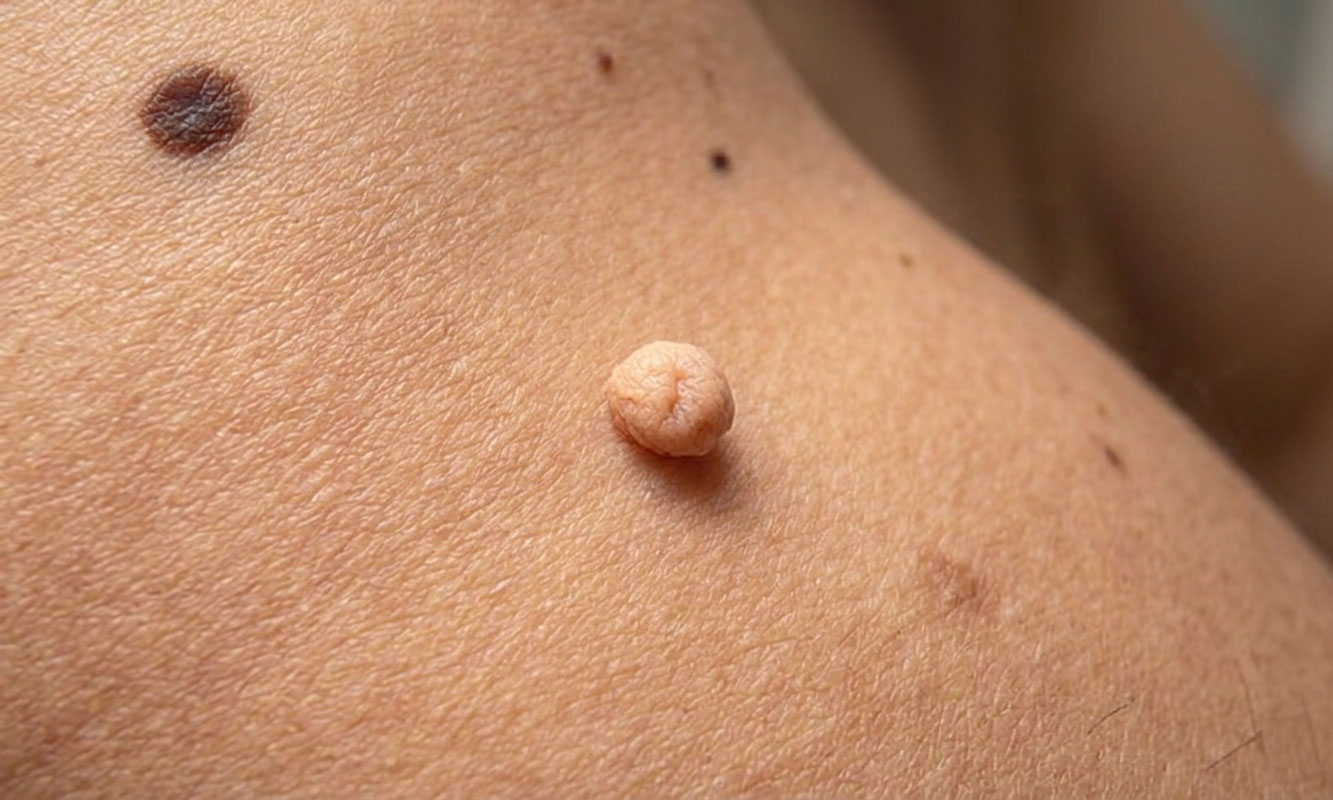
Skin tags, known medically as acrochordons, are small, soft growths that protrude from the skin on a thin stalk. They are typically flesh-coloured or slightly darker than the surrounding skin, and range in size from a couple of millimetres to around a centimetre. They most commonly appear in areas where skin folds or rubs - such as the neck, armpits, groin, under the breasts, on the eyelids, and along the waistline.
Skin tags are entirely benign. They are not cancerous, do not become cancerous, and do not spread to other parts of the body. That said, if you notice any skin growth that changes colour, bleeds, causes persistent pain, or has an irregular shape, it is always worth having it assessed by a clinician to rule out other causes.
The precise cause of skin tags is not fully understood, but research points to a combination of factors that increase the likelihood of developing them.
The most widely recognised contributing factor is repeated friction, either skin rubbing against skin, or skin rubbing against clothing. This explains why skin tags so often appear in body folds and creases. Areas like the neck, armpits and inner thighs are particularly prone because of the constant movement and contact in these regions.
Pregnancy is associated with a notable increase in skin tag formation. Hormonal fluctuations during pregnancy affect the skin in various ways, and many women find that new skin tags appear during this period. In most cases they are harmless, though some may prefer to have them assessed or removed after the pregnancy.
There is a well-established link between skin tags and insulin resistance. People with type 2 diabetes or pre-diabetes are more prone to developing them, and the presence of multiple skin tags can sometimes prompt a clinician to investigate blood glucose levels. If you have developed a large number of skin tags over a short period, it is worth mentioning this to your GP.
Carrying excess weight tends to increase skin friction, particularly in body folds, and is associated with higher rates of skin tag formation. Achieving and maintaining a healthy weight may reduce the likelihood of new skin tags appearing over time.
Skin tags become significantly more common with age. While they can appear at any point in adulthood, they are most frequently seen in middle-aged and older adults. Children rarely develop them.
There appears to be a hereditary element to skin tag development. If close family members tend to develop skin tags, you may be more likely to do so as well.
In the vast majority of cases, skin tags are completely harmless and do not require medical treatment. Common reasons people choose to have them removed include:
All of these are valid and understandable reasons to seek professional removal. The procedure is straightforward and low-risk when carried out by an experienced practitioner.
A quick search online returns a range of home removal methods, from over-the-counter freezing kits to tying a skin tag off with thread. While these may seem convenient, they carry real risks. Infection, incomplete removal, scarring and significant discomfort are all possible - particularly for skin tags that are larger, located in sensitive areas, or on thinner skin such as the eyelids.
Professional removal under local anaesthetic at a specialist clinic is safer, more comfortable and more effective than attempting removal at home. It also ensures the skin is properly managed during healing to minimise the risk of scarring or complications.
At Minor Surgery Clinic, we offer professional skin tag removal at our clinics on Harley Street in London and in Bexleyheath, Kent. Our experienced practitioners carry out each procedure under local anaesthetic, so the process is comfortable and stress-free.
Depending on the size, location and number of skin tags, we may recommend one of the following approaches:
At your initial consultation, one of our clinicians will assess your skin tags and recommend the most appropriate treatment for your individual circumstances. Multiple skin tags can often be treated in a single appointment, so there is no need for repeated visits.
If you have skin tags that are causing irritation, affecting your confidence, or you would simply like them removed safely by a specialist, we would be delighted to help. Our clinics in Harley Street, London and Bexleyheath, Kent offer discreet, professional consultations in a welcoming environment.
Contact Minor Surgery Clinic today to book your consultation. Our team will be happy to answer any questions you have about the procedure and help you choose the right treatment for your needs.