
A sebaceous cyst is a common, non-cancerous lump that develops beneath the surface of the skin. Despite the name, what most people call a sebaceous cyst is usually either an epidermoid cyst or a pilar cyst. These terms are often used interchangeably, and unless a sample is sent for laboratory analysis, the distinction is rarely significant for treatment purposes. All three types are benign, slow-growing, and typically filled with a soft, cheesy material made up of keratin, a protein produced naturally by the skin.
Sebaceous cysts are very common. Most are entirely harmless and cause no symptoms beyond a visible lump beneath the skin. However, they can grow over time, become infected or inflamed, and some people choose to have them removed for cosmetic reasons or to relieve discomfort.
Sebaceous cysts form when the sebaceous gland or hair follicle becomes blocked or damaged, trapping material beneath the skin surface. There are several factors that can contribute to this:
Sebaceous cysts can affect people of any age, though they are most common in adults. Men are slightly more likely to develop them than women.
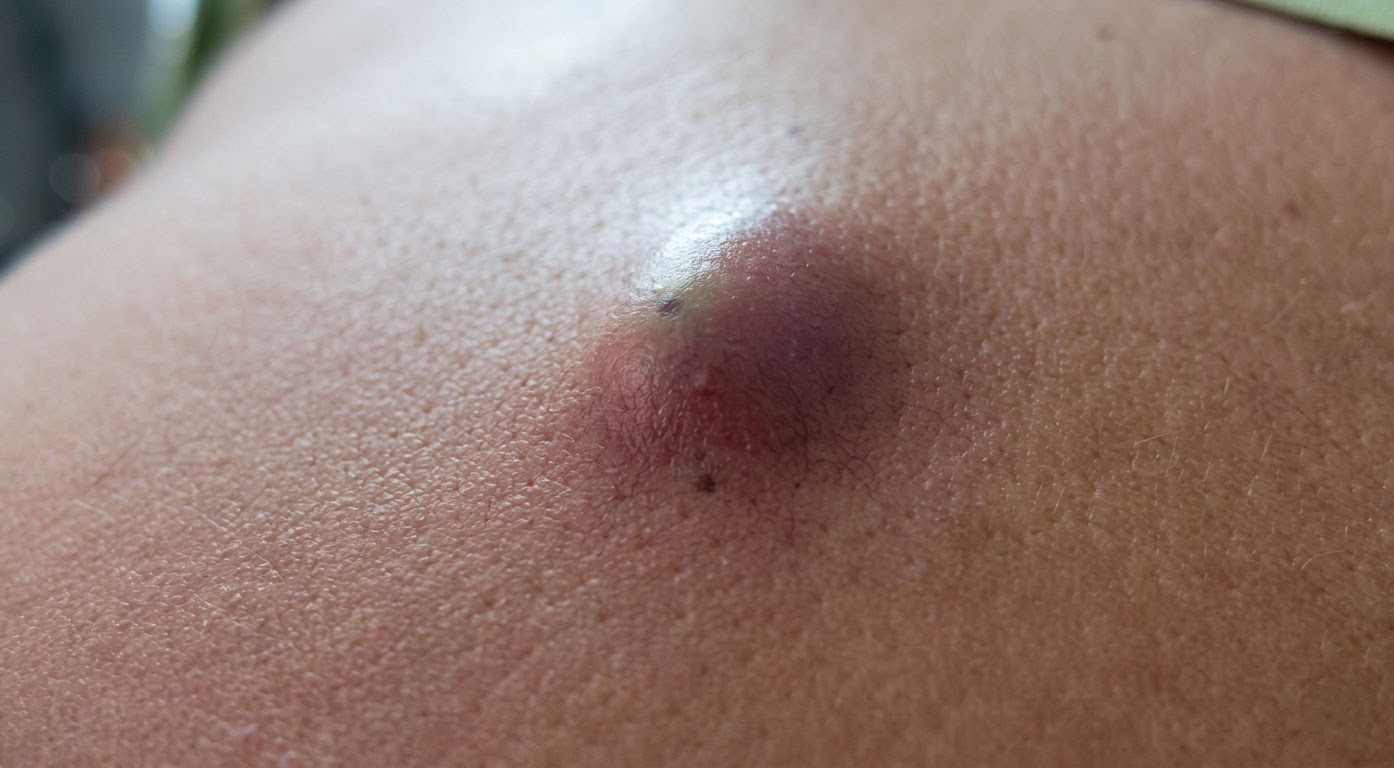
Most sebaceous cysts are easy to identify by their appearance. They typically present as a smooth, round lump beneath the skin surface that is freely movable when pressed gently. They range in size from a few millimetres to several centimetres in diameter, and are often flesh-coloured or slightly yellowish. Many have a small, dark spot visible at the surface, marking the blocked pore through which the cyst formed.
When undisturbed, a sebaceous cyst is usually painless. If the cyst becomes inflamed or infected, it may become red, tender, swollen, and warm to the touch. In some cases, an infected cyst can discharge a thick, foul-smelling substance.
Sebaceous cysts can develop almost anywhere on the body, but they are most frequently found on the face (particularly the jaw, cheeks, and forehead), the neck, the upper chest, the scalp, and the back. They can also appear in other areas including behind the ears and on the groin.
The vast majority of sebaceous cysts are benign and pose no risk to health. However, there are situations where a cyst can become problematic, or where medical assessment is important:
It is worth noting that a sebaceous cyst, by definition, is benign. However, not every lump beneath the skin is a sebaceous cyst. If you are unsure about any lump, a consultation with a specialist is always the right first step.
Not all sebaceous cysts require treatment. Small, stable, symptom-free cysts can often be monitored and left alone indefinitely. However, removal is generally recommended if the cyst is growing, has been infected or inflamed on more than one occasion, is causing pain or discomfort, is in a prominent location and causing cosmetic concern, or you simply prefer to have it removed for peace of mind.
The only definitive treatment for a sebaceous cyst is surgical excision, which involves removing the cyst along with its capsule (the surrounding wall). Draining the cyst alone is not sufficient, as the cyst will almost certainly return if the capsule is left behind.
At Minor Surgery Clinic, cyst removal is a straightforward outpatient procedure carried out under local anaesthetic. It does not require a hospital stay, and most patients are able to return to normal activities within a day or two.
The procedure typically involves a local anaesthetic injection to numb the area completely, followed by a small, precise incision over the cyst. The surgeon then carefully removes the entire cyst and its capsule before closing the wound with fine sutures. Written aftercare instructions are provided, along with a follow-up appointment where needed.
Patients are awake throughout and experience minimal discomfort during the procedure. Some bruising and tenderness in the area is normal in the days that follow, and sutures are typically removed after seven to ten days. Scarring is generally minimal, particularly when the cyst is removed before it becomes infected or significantly enlarged.
NHS removal is generally only available for cysts that are infected, causing significant functional problems, or where there is clinical uncertainty about the diagnosis. Cosmetic removal is not routinely funded on the NHS, and waiting times for eligible procedures can be lengthy. If your cyst is not causing clinical problems but you would like it removed, private treatment is the most convenient option.
Minor Surgery Clinic sees patients at our clinics on Harley Street in central London and in Bexleyheath, Kent. Both locations offer consultations and same-site procedures, with short waiting times and experienced surgical teams. Whether you are based in central London, South East London, or Kent, we have a clinic close to you.
If you have a lump you believe may be a sebaceous cyst and would like an expert opinion, the first step is a consultation with one of our surgeons. During this appointment, we will assess the cyst, confirm the diagnosis, and advise you clearly on whether removal is the right course of action for you.
We see patients at our Harley Street and Bexleyheath clinics. Contact us today to book your consultation and take the first step toward having your cyst treated safely and professionally.